A lot of people ask the same question before visiting Paris: “Is it safe?”
If you read the news or watch TV, you might feel nervous. Stories about protests, strikes, or crime can make Paris sound scary.
But the truth is more balanced. Paris is a big city. Like all big cities, it has problems. Most of them are minor, and most trips go by without a serious incident.
In this article, I’ll share the facts, the real risks, and what to actually watch out for — so you can visit with confidence and without naivety.
The Short Answer: Yes — But Know What You’re Walking Into
Yes, Paris is safe to visit in 2026. Every year, over 30 million people come to Paris. The vast majority have a great time and go home with nothing but good memories.
The real risks are not violent crime or terrorism. They are pickpocketing, scams, and a few neighborhoods that are best avoided after dark.
These things can be annoying, and occasionally costly. But they are manageable — if you know what to expect.
The Most Common Issues Visitors Face
These are the things that actually happen to tourists in Paris. Not the dramatic stuff — the everyday stuff.
1. Pickpockets
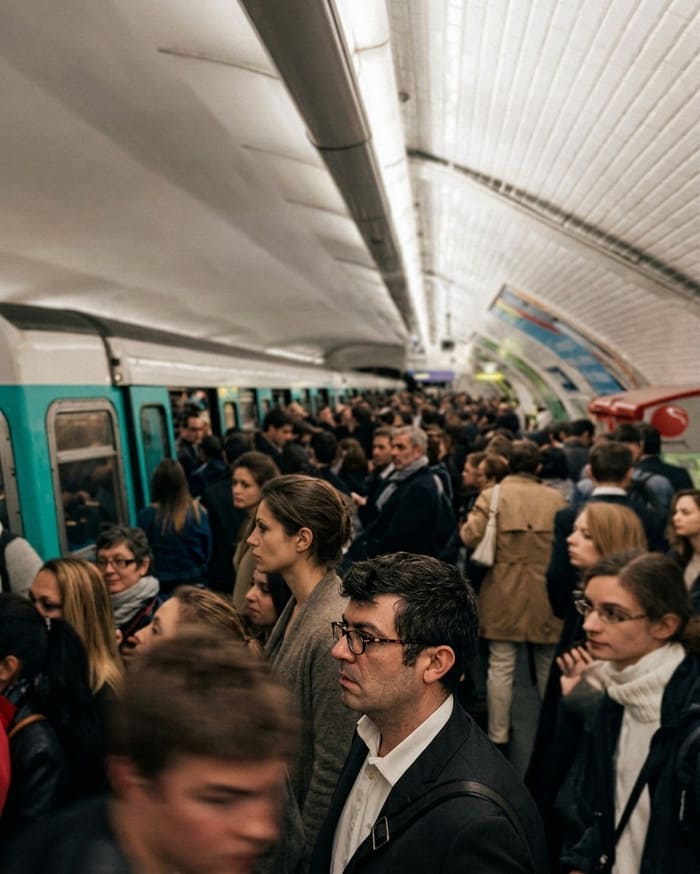
Pickpocketing is the most common problem for visitors in Paris. It happens in busy, distracted crowds — and the people doing it are often very good at it. You won’t feel a thing.
The highest-risk spots are:
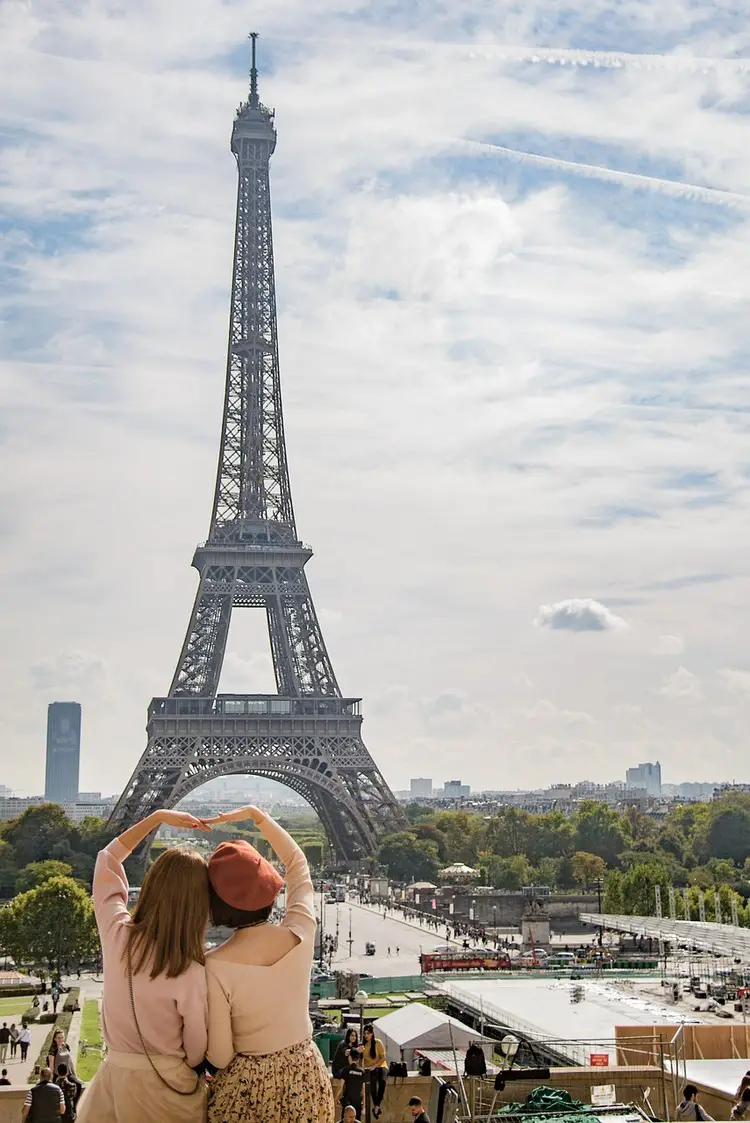
- The Eiffel Tower area and Trocadéro
- The Metro, especially lines 1, 4, and 9
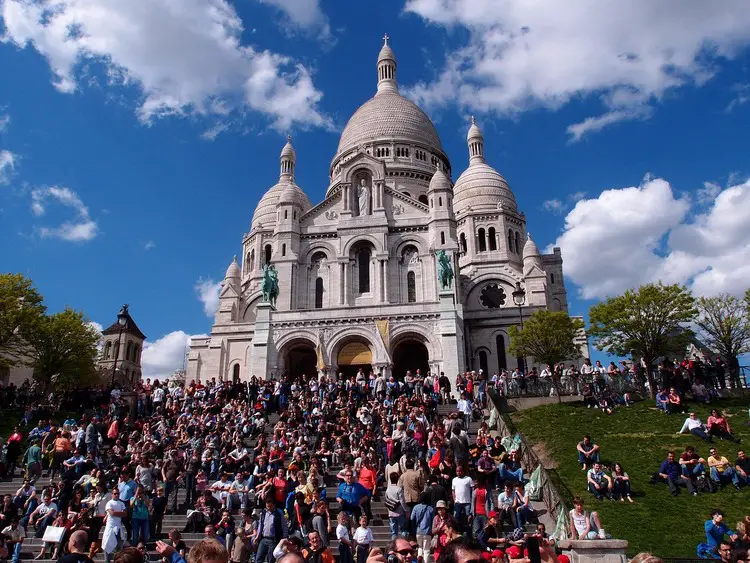
- The Sacré-Coeur area in Montmartre
- The Champs-Élysées
- Major train stations, especially Gare du Nord
- The Louvre queue
The pattern is always the same: distraction, then theft. Someone bumps into you, asks for directions, or creates a commotion nearby. By the time you realize what happened, the phone or wallet is gone.
The fix is simple: keep your bag zipped and in front of you, never put your phone or wallet in a back pocket, and stay alert in crowded spots. That’s it. Most locals do exactly this without thinking about it.
Read more: What Every Paris Tourist Needs to Know to Outsmart Pickpockets
2. Scams
Paris has a few well-known tourist scams. They’re not dangerous — but they’re designed to make you feel awkward enough to hand over cash.
The friendship bracelet: Someone in Montmartre approaches you and starts tying a bracelet around your wrist before you can say no. Once it’s on, they demand payment. The answer is to never let anyone touch your wrist or hand — just walk past without engaging.
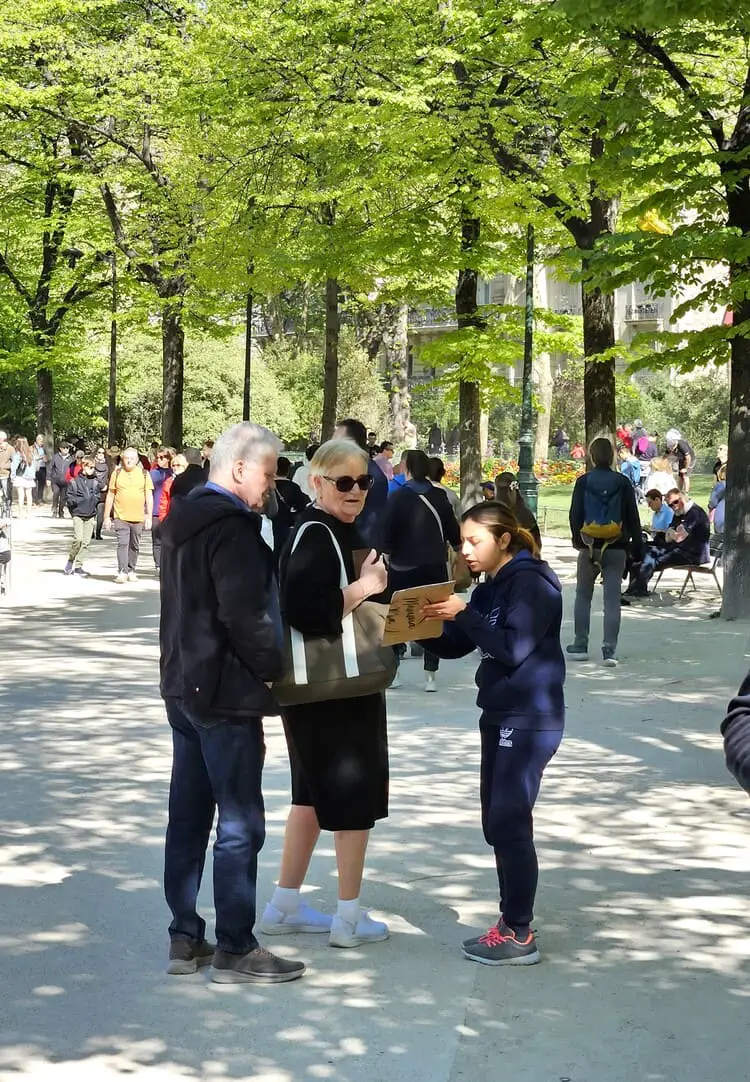
The fake petition: A group of teenagers approaches with a clipboard asking you to sign a petition for a worthy cause. The real goal is to distract you while others empty your pockets. Don’t stop, don’t sign.
The gold ring: A stranger “finds” a ring on the ground near you and offers it to you as a gift, then immediately asks for money in return. The ring is worthless. Walk away.
The airport taxi scam: Unofficial drivers outside Gare du Nord or Charles de Gaulle will offer rides at what sounds like a fixed price. The meter runs differently. Always use the official taxi rank or book through the G7 app.
If someone approaches you unsolicited near a tourist site, the safest move is to keep walking. You don’t owe anyone an explanation.
Read more: 6 Common Scams in Paris Tourists Are Falling For Every Day
3. Metro Thefts
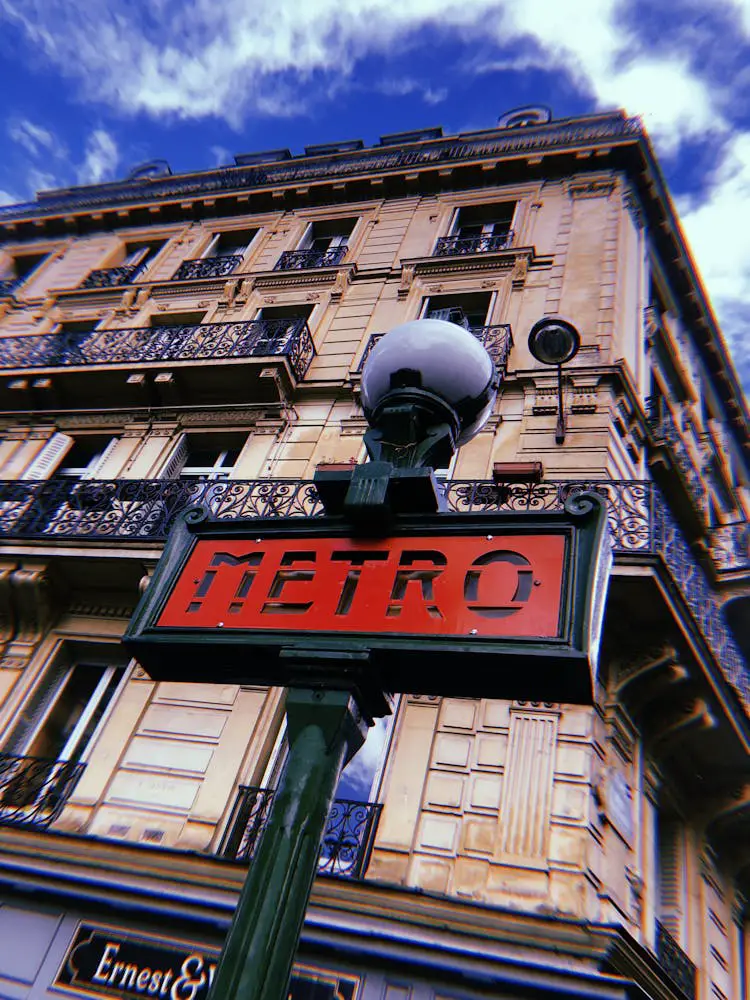
The Metro deserves its own section because it’s where a large share of theft in Paris happens — and it happens in a very specific way.
Thieves work in pairs or small groups near the doors. As the doors are about to close, one person grabs your phone or bag and steps off the train just before they shut. By the time you react, the train is moving. It takes two seconds.
Lines 1, 4, and 9 have the highest rates of reported theft. Châtelet-Les-Halles, Gare du Nord, and Saint-Lazare are the stations to be most alert in. But it can happen anywhere on the network during busy hours.
The rule is simple: never have your phone out near the doors when the train is about to leave. Keep your bag closed and in front of you. If someone is standing unusually close to you in a way that doesn’t feel right, move.
What Rarely Happens (But People Fear)
A lot of the anxiety around Paris safety comes from news coverage of things that are genuinely rare. Here’s the honest picture.
Violent Crime
Serious violent crime against tourists — muggings, attacks, armed robbery — is rare in Paris. It happens, but it’s not a significant risk for the average visitor in tourist areas and central neighborhoods.
The crimes that happen to visitors are almost always non-violent. Sneaky, not aggressive.
Terrorism
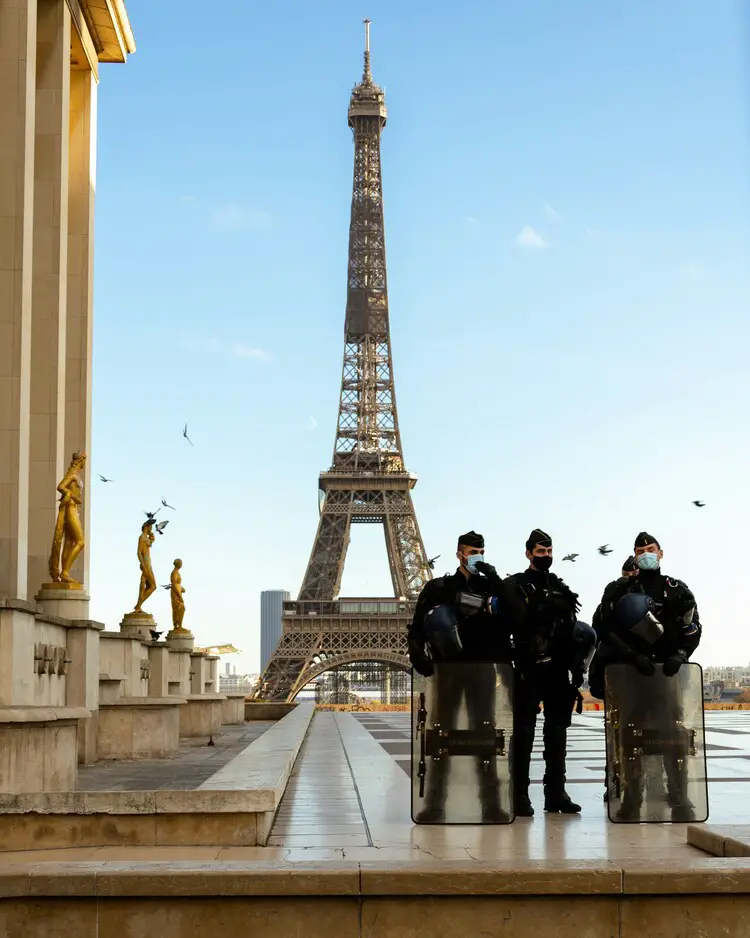
France has experienced terrorist attacks in the past, and this is something the French government takes seriously. Since 2015, security around major public spaces has been significantly reinforced. You will see armed soldiers at the Eiffel Tower, Notre-Dame, and major train stations. This is the Vigipirate security plan — France’s permanent anti-terrorism protocol — and it has been at an elevated level for years.
The visible security is a feature, not a warning sign. Random attacks on tourists are extremely rare, and the heightened presence is part of why.
Protests and Strikes
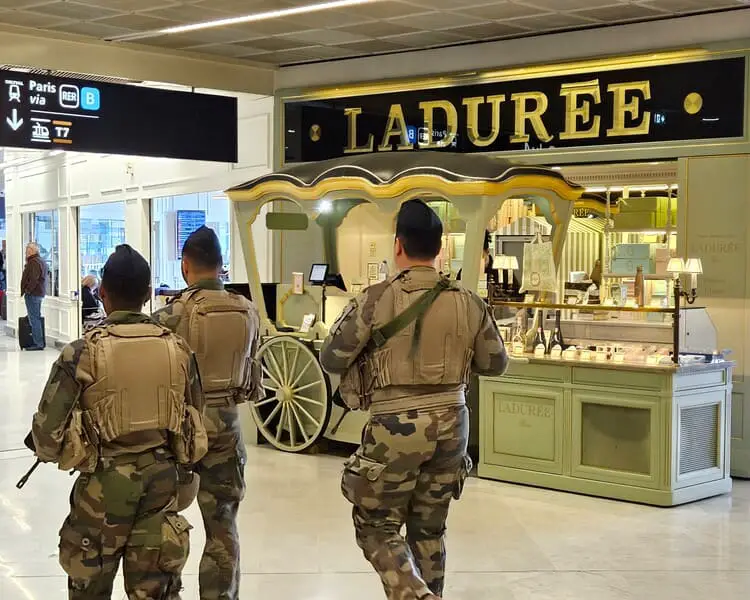
France has a long tradition of public protest, and Paris is where it shows up most visibly. Strikes on the Metro, demonstrations on major avenues, the occasional blocked road — these are a normal part of Parisian life, not emergencies.
The gilets jaunes (yellow vest) protests of 2018-2019 and the pension reform protests of 2023 both made international news. The reality on the ground for most tourists was manageable disruption, not danger.
If you’re visiting, check the news before a big day out. Avoid large demonstrations — not because they’re violent, but because the edges of protests can attract opportunistic theft, and the Metro may be disrupted. Central Paris life continues around most protests without serious interruption.
Is Paris Safe at Night?
For the central arrondissements (districts), yes. Most tourist areas stay lively well into the evening. The Marais, Saint-Germain-des-Prés, Montmartre, and the areas around the Eiffel Tower and Notre-Dame are all fine to walk at night, including for solo travelers.
The same rules apply after dark as during the day — keep your bag close, stay aware. The risk of pickpocketing goes down at night because the crowds are smaller. The Metro late at night is generally fine in central areas, though some lines and outer stations feel less comfortable after midnight.
Where you do want to exercise more caution after dark: Gare du Nord and the surrounding streets, Barbès, Stalingrad, and parts of the 18th and 19th arrondissements outside the tourist areas. These neighborhoods are not no-go zones, but they have more incidents at night and are worth being deliberate about.
Read more: Paris Safety Guide: Areas to Avoid at Night
Is Paris Safe for Solo Travelers and Women?
Paris is generally a safe city for solo travelers, including solo women. Millions of people travel alone here every year. The walkable neighborhoods, well-lit streets, and reliable Metro make it easy to get around independently.
That said, a few things are worth knowing. Street harassment can happen, particularly in some areas of the 18th and around certain Metro stations. France introduced laws against street harassment in 2018, which has helped — but it hasn’t disappeared. The practical advice is the same as any major city: trust your instincts, keep moving if a situation feels uncomfortable, and stick to busier, well-lit streets at night.
For solo travelers arriving at Gare du Nord late at night, it’s worth taking a taxi to your hotel rather than navigating on foot. The station area at night is not the best introduction to Paris.
What Parisians Themselves Do
The best indicator of how safe a city feels is how its own residents behave. Parisians take the Metro every day. They walk home at night. They sit outside at cafés until late. They let their kids take the Metro alone from an early age.
That’s not the behavior of people living in a dangerous city.
The neighborhoods that tourists worry about most — based on news stories and social media — are generally not the neighborhoods tourists visit. The main tourist areas of Paris are busy, well-patrolled, and used daily by millions of people who live and work there. The anxiety around Paris safety is mostly a media construction. The reality is a city that functions normally, where the main practical risk is a pickpocket at the Eiffel Tower.
What to Do If Something Goes Wrong
Most trips to Paris are trouble-free. But it’s worth knowing what to do if something does happen.
If you’re pickpocketed: Report it to the police as soon as possible — you’ll need the report for your travel insurance claim. The nearest police station (commissariat de police) can file the report. You can also file online at pre-plainte-en-ligne.gouv.fr before going in person, which saves time.
If you lose your passport: Go to your country’s embassy or consulate in Paris. They can issue an emergency travel document. Keep a photo of your passport on your phone as a backup.
Emergency numbers in France:
- 15 — SAMU (medical emergency)
- 17 — Police
- 18 — Fire brigade (sapeurs-pompiers), also handles medical emergencies
- 112 — European emergency number, works from any phone including foreign SIM cards
Save 112 in your phone before you arrive. It works everywhere in France.
How to Stay Safe: Practical Tips
None of this requires paranoia. These are the same habits any sensible traveler uses in any major city.
- Use a bag that zips and wear it across your body, with the zipper facing you. A bag hanging open behind you is an invitation.
- Never put your phone or wallet in a back pocket. Front pocket or inside a zipped bag only.
- On the Metro, keep your phone away near the doors when the train is about to leave. That’s when grabs happen.
- At tourist sites, stay aware of your surroundings. If someone bumps into you or creates a distraction, check your pockets immediately.
- Don’t engage with strangers who approach you unsolicited near tourist sites. A firm “no” or simply walking away is always the right move.
- At night, stick to well-lit streets. If a Metro station or carriage feels uncomfortable, trust that instinct and wait for the next train or take a taxi.
- Book taxis through the G7 app or use official taxi ranks. Don’t accept rides from people approaching you at stations.
Is Paris Safer Than American Cities?
For most visitors, yes — on the dimensions that matter most.
Paris has significantly less violent crime than most major American cities. There are far fewer guns in circulation, armed robbery is rare, and the kind of random street violence that happens in some U.S. cities is not a feature of everyday Parisian life.
The trade-off is that Paris has more pickpocketing than most American cities. So the calculus is: lower risk of being hurt, higher risk of losing your phone or wallet if you’re not careful.
For almost all visitors, that’s a trade-off they’d take every time.
My Honest Take
I’ve walked around Paris hundreds of times — in the daytime, in the evening, late at night. I’ve taken the Metro alone, walked through tourist areas, cut through neighborhoods that don’t make it into the guidebooks.
Have I seen pickpockets at work? Yes. Have I ever felt in danger? No.
Paris is not a dangerous city. It is a busy, unequal, sometimes chaotic city — like every major European capital — and it has the petty crime that comes with that. The people who have bad experiences there are usually the ones who didn’t know what to watch for, not the ones who were targeted for any other reason.
Go. Stay alert. Keep your bag zipped. You’ll be fine.
Conclusion
Is Paris safe in 2026? Yes — for visitors who use basic common sense.
The real risks are pickpockets and scams, not violence. A few Metro lines deserve extra attention. A few neighborhoods are better avoided late at night. And knowing what to do if something goes wrong takes five minutes of preparation.
Keep your bag close. Stay aware in crowds. Don’t engage with strangers who approach you near tourist sites. That’s the whole checklist.
The rest is Paris — and it’s worth every bit of it.

With a passion for travel and having visited over 50 countries, Dorian is eager to share his favorite spots and expert tips to help you explore Paris and France like a local.